
 ]
] ]
] ]
] ]
] ]
]Nerd Fitness Plan
Michael W. Arnold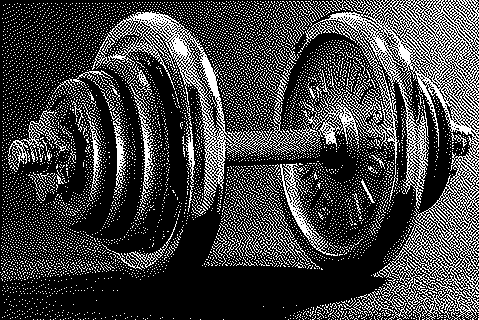
There are many voices online — especially this time of year — giving advice on how to loose weight and get fit. As someone who’s been tubby and/or weak his entire life, I’ve listened to and tried much of this advice. Restrictive eating, hardcore training plans, P90x, Paleo, WeightWatchers, etc., etc. They all absolutely work. No doubt there. But, they are not sustainable.
Diet Plan
In my mid-30s I found a sustainable diet plan that’s incredibly simple:
That’s really it for diet. Drop the ultra-processed foods, delete the apps, cook real food at home, and you can basically just forget about food. You’ll either slowly loose or, if you are like me, slowly gain because you drink too much and spend 90% of your waking hours sitting sedentary.
This is where fitness and exercise come in. But, like a sustainable diet, it can’t be something crazy and hard that’s dropped the first time it rains, the first time you’re sick, or the first time you go on a trip. It has to be simple, not painful, and integrated into your life.
Fitness Plan
If you have the ability to work at home or in a (semi) private office and have around two hours of passive desk work3 each day, you can easily integrate this plan into your life.
The only equipment you’ll need are:
The Exercise Plan
First 90 Days
For the first three months, focus just on getting into the habit of walking. If you’ve been sedentary, you’re going to be tired after walking. You’re going to have sore legs. You’re going to be sweating. This is all temporary. You have to power through this first three months.
Here’s the plan. Five days a week (every work day) commit to walking 5,000 steps. Each morning, look at your calendar and find the meeting(s) or time slot you’ve got for walking. Depending on your speed, you’ll need an hour to an hour and a half. Plan ahead and do the walk. Don’t skip. Don’t put it off.
At this phase, you aren’t really going to be losing weight or anything like that. What you’re really doing is building a foundating of leg strength, aerobic capacity, stamina, and — most importantly — establishing the habit.
Go slow.6 Don’t weigh yourself. Again, the point in this phase is the habit and getting your body used to balancing, focusing, and functioning while walking. In these first three months you’re building the foundation you can build upon.
The Next Five Months
With a foundation established, you are now ready to start making real progress.
Your new goal — a goal you’ll maintain the rest of your life — is 50,000 steps per week. That works out to walking 10k steps each business day. You’ve established the habit in the first three months, so I’d recommend keeping the five-day habit.
But, here’s the thing. We need this to be sustainable. That means it needs to flex with real life. This is where planning comes in. Going on a business trip Wendesday and Thursday? Do 20k steps on Monday and Tuesday. Have an all-day offsite on Friday? Do 13k a few days earlier in the week or plan on doing a special Saturday 10k while you watch a movie.
Hold the 50k a sacred. Always plan ahead and make sure you can complete the goal. Use a tracking application on your phone or do it on paper. Make sure you can see how long you’ve maintained your walking streak.
Since you’re not doing restrictive dieting, weightloss will be slow. But, you are playing the long game here. This isn’t about quick wins, but life changing habits. Tracking your walking streak is the motivation at this point. You’ll walk and walk and walk. You’ll start feeling strong. You’ll stop sweating. You’ll stop breathing hard. But, the mirror won’t look all the different. Keep going no matter what!
Month Eight, Get Strong
After eight months of walking, you’ll be a few pounds lighter, have amazing aerobic fitness, and really notice how much stamina and energy you have. You’ll be feeling great, down in pant size, and have an awesome walking streak you can be proud of. You’ll also notice that more often than not, you totally forget you’re walking. You’ll find yourself getting lost in work and realizing you do 15k steps. Your habit will be established such that your body wants to move each day. Most weeks, you’ll find you hit 50k by Wednesday or Thursday. You’ll walk anyways and find your average is actually more like 60k or 65k in a week.
Now it’s time to build on your great foundating of walking. You know how to start a habit. You know how to dedicate to a lifestyle change. You know how to plan and flex your plan to maintain your fitness goals in the midst of real life. It’s time to level-up and do it again.
Cardio alone isn’t sufficient to live life to its fullest.7 Muscle burns more calories than fat. Strong people truly can eat more because their body burns calories doing nothing. And, here’s what’s crazy: you don’t have to be a jock or go to a gym to get the same benefits. Lifting is easy, can be done in your office, and doesn’t make you sweaty. I lift multiple times per week and never change clothes!
Like when you started walking, the secret to starting to lift is to take it slow and easy. Start with your dumbbell at something incredibly low. Again, I’m a hobbit, so I started at around 5 pounds. Stick to that weight for two months. Trust me. It’ll be really easy. It’ll feel like you need to go up. It’ll be embarrassing and you’ll keep your lifting a secret. But, again, this is about the long game. You are doing this to establish a life-long habit; not get quick gains.
Now, go online and find a dumbbell-only full-body strength training routine. I started here and eventually added resistance bands. But, there are so many options. There are apps. There are websites. In the end, it doesn’t really matter. Find a plan you like.
Depending on the day — if you’ve got arthritis like me — it’ll take you between 20 and 30 minutes to do your routine. I usually do mine during my lunch break or when I’m done for the day right before I leave my office. But, you’re an expert on flexible, sustainable habits now. Do what works best for you.
To start with, you’re going to commit to doing strength training twice a week. I did Tuesday and Thursday when I started. Track it just like you did with walking. You’re going to lift for months before you see anything in the mirror. Like walking, your lifting streak will be the motivator to start with. For the first while, you’ll be sore. I recommend lifting after you walk. There will be a temptation to not walk on lifting days. Fight the temptation. You are starting a habit and need to push through.
Month Ten, Fit Life
Once you hit month ten, you’ve done it. You’ve sucessfully integrated healthy exercise into your daily life. You’ll be losing weight, gaining muscle, and starting to notice your body recompose itself. You’ll feel good, you’ll be strong, you’ll be in the top 20% of Americans.
This is where you can start increasing the weight. It’s called “progressive overload.” You can read more about it online, but, basically, every eight to ten weeks you are going to be ready to increase the weight you are lifting. Because of the set I bought, I increment at 2.5 pounds.
As you start to increase the weight, you’ll start to notice that lifting makes you feel good. There’s a sort of lifting high. You’ll want to lift every day, but that’s a bad idea. You need 48 hours between lifting to give yoru body time to heal. (It’s on the rest day that your body actually builds muscle.) For me, somewhere four months in, I switched to lifting three times a week (Monday, Wednesday, and Friday). For my schedule it just worked, it felt good, and it made results come faster. But, I still only commit to twice a week. That gives me a buffer and flexibility for weeks when I travel or something comes up.
Conclusion
So, that’s it. Slow and steady. Build some simple habits into your life. Start really slow. Hold to the long term goal and don’t get discouraged by slow progress.
For me, this plan has been game changing.
I’ve gone from fat, tired, and weak to being in the top 10% of men for strength and top 10% on activity level.
I never think about eating. I don’t stress or worry about exercise. I can help out at church and around the home.
It’s still crazy to me how easy and simple this is — once the habit is established. I’m fitter and stronger than most of my peers. I’m fitter and stronger than most guys who are only able to hit the gym once a week and do a run our two.
And, I do it all from my little office between and during meetings.
In Defense of Food by Michael Pollan fills in exactly what that means. Read the book, watch the documentary, try BlueApron (to learn to cook), and get some good Mediterranean cookbooks. ↩︎
Read Intuitive Eating by Tribole & Resch for exactly what this means. It will truly transform your relationship with eating and food. ↩︎
This means things like Zoom/Teams meetings, phone calls, responding to e-mails/chats, listening to trainings, or reading documentation. ↩︎
I use a folding walking pad, but I’ve been looking at some dedicated underdesk models for when it eventually burns out. ↩︎
I bought a set of handles that take universal plates at Academy Sports. It was cheap and gives me a lot of flexibility. Plus, it’s an accomplishment when I run out of plates and need to go buy more. ↩︎
Like, really slow. I’m a hobbit so you might go a little faster. But, for me 2mph is comfortable after 18 months of walking. I started at 1.3 or 1.5mph. This isn’t about speed, it’s about quantity. ↩︎
You can read about my observations about being strong for the first time here: Observations from the Newly Fit ↩︎