
 ]
] ]
] ]
] ]
] ]
]Instapot Yoghurt
Michael W. Arnold1. Sanitize
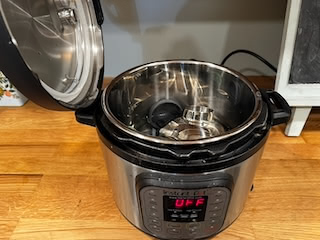
Put spoons, lids, jars, etc. into the Instapot and do a manual high pressure cooking program for 10 minutes. This’ll take several rounds to get everything sanitized. We have a larger canner, so I usually sanitize things there to make this go quicker. At any rate, you’ll have to sanitize the Instapot at least once to make sure the bowl and everything are good. Also, this isn’t required, but the metal pot for the Instapot is pretty cheap to find online. I like to use a dedicated pot for my yoghurt just to be safe.
2. Boil Milk
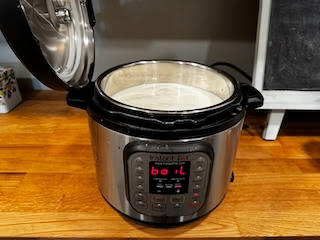
I don’t know all the details, but you need to heat the milk up to 180 degrees Fahrenheit or so to loosen some proteins that makes for smoother yoghurt. The Instapot has a yoghurt setting. If you press the youghurt button and then press adjust, it’ll cycle through some settings. “boil” is the setting you want. It’ll automatically get the milk up to the appropriate tempurature and then beep when done. I always make a gallon of yoghurt at a time.
3. Cool the Milk
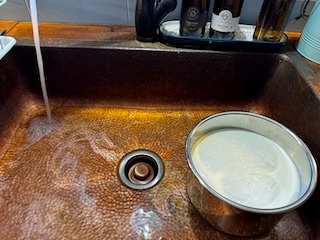
Once the milk has boiled, I move it to the sink and fill it with cold water. I’ve never measured the water tempurature, but whatever it is here in Nashville, a gallon of milk cools in about 15 minutes. The tempurature you are looking for varies by the yoghurt culture strand you are using. For the ones I’ve been using, it’s 110 degrees Fahrenheit or so.
4. Add the Culture
Next, I move the cooled milk back into the Instapot. I stir in my culture. Finally, I set the Instapot to the yoghurt setting and bump it to 15 hours or so. Most cultures will tell you to ferment for 5 or 6 hours. I always do 10 to 12 hours. Sometimes I do closer to 13 or 14. The longer you ferment, the thicker, but also more sour the yoghurt will be.
Usually, I do my yoghurt in the evening after dinner. That way it’s hitting the pot to ferment around 6p or 7p and I can jar it when I wake up in the morning.
5. Jar the Yoghurt
Once the yoghurt has gotten to a place I’m happy with, I ladle it into quart-size jars and place it in the refrigerator to cool. I also keep four tablespoons or so of yoghurt in a smaller jar use as my starter culture for the next batch. That’s it, by the next morning, my yoghurt is nice and cold and I’m ready for a delicious and healthy breakfast.