
 ]
] ]
] ]
] ]
] ]
]Pray Always
Michael W. Arnold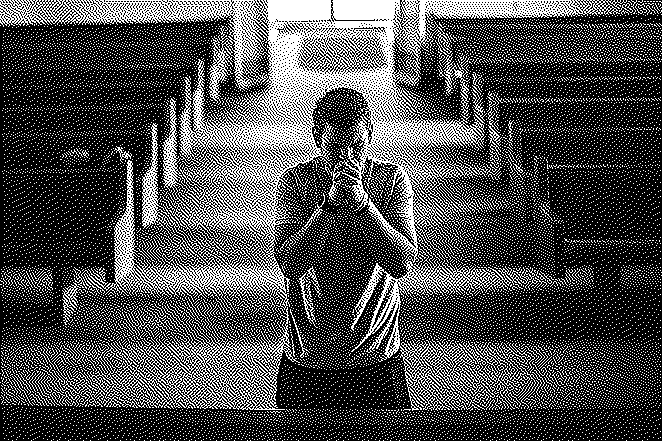
I come to you this morning “fresh off the plane” from the 148th synod of the Diocese of Quincy. Due to weather conditions, our flight was delayed and we ended up taking an in-air detour through Michigan and Ohio to get safely home to Tennessee at around 10:30p last night. But, neither the airport, hours in a cramped plane, hoards of travelers, nor the stresses of travel could remove the joy, hope, and peace I received at our synod.
Now, on face value, synod should not be a fun time, especially for an introvert like myself. Synod is a lot of small talk, a lot of church, a lot of meetings, many, many presentations, and a lot of patiently waiting. Truth be told, I don’t really know what’s going on most of the time at synod. I just wait for our dear vicar, follow his lead, and do what he volunteers me for.
And, yet, from all of this I come away from synod very, very tired, but also energized and glowing.
The theme of this year’s synod was “our labor is not in vain.” And, that, is the message that has so filled my heart with joy and renewed my hope for what God is doing in the world.
Now, what might be expected of me, is to share some deep and great insight from the episcopal address or one of the many great sermons. Or, maybe, I should have been deeply moved by one of the many presentations of the work God is doing at our missions around the world. With no disrespect to the many speakers and ministers, while those were all good and uplifting, they are not the greatest impact of synod. The greatest impact of synod is the people.
I’ve been to many, many church meetings in my life. They are formal, boring, bureaucratic, and outside of a few guys in strange clothing could easily be mistaken for a business meeting. There are arguments, debates, politics, and all the things you’d expect among fallen man trying to come to a common decision. Now, it is not to say that these things do not exist at our synod, they absolutely do. But, there is something at synod that transcends the ways of man and points us to a better Way.
At synod, you can sit back and see the workings of men who have come to know our Lord and have been deeply transformed by him. Without words, outside of presentations, and without knowing that anyone is watching; our bishop, our abbot, the many priests, nuns, deacons, and visiting bishops show the love, grace, mercy, and peace of God in their actions. It is in the smiles. The hugs of true fellowship and brotherly love. The willingness to serve at a moment’s notice. The earnest, passionate prayers. The love we all share for our bishop. The shared care and devotion we have to our Lord and His Holy Church. The sweet conversations we have about our parishes and the work God is doing within them. How the conversation changes from the conservation of money, space, or time to an exuberant generosity of all things when we talk about the poor, needy, lonely, and lost.
In all of these things, I am able to see God at work in real people and real places. I am reminded that St. Andrew’s doesn’t stand alone. Our labor is not in vain. God is doing a great work not just here in Nashville, but all over the world. God can and does change hearts. Years of prayer and service do make you a better person. I’ve seen holy men. I’ve received their kindness and care. Our God is at work and present in our world today. Our labor is, indeed, not in vain.
Which, brings me to our gospel reading today. St. Luke shares with us one of our Lord’s stranger parables. Jesus tells us a story about a city led by a powerful judge. This judge is not necessarily wise and I get the sense from Jesus’ story that the judge isn’t particularly kind or fair. This judge doesn’t respect God or care about people at all. Virtue, brotherly love, kindness, compassion, and so on, do not move this judge. He is a man that only cares about power and comfort. He wants the tax money and then he wants to be left alone to feast.
So far, so good. I’m sure the first hearers of this parable assumed Jesus was about to tell them a story about greed or power. They were ready to hear another powerful admonition directed towards the Romans and Jewish leaders. Instead, they got a joke. And I do mean a joke. Jesus has a sense of humor and it really shows in this parable. You see, in this city there isn’t just this awful judge, but there’s an equally awful old widow women. She, too, is grumpy, mean, and selfish. All she cares about is getting back at her enemy. In hearing the story, you can almost see Jesus winking to the crowd as he talks of her. We all have someone in mind. Mean old Gladys who’s still mad about what Margret did at the church raffle all those many years ago. Gladys who won’t stop talking about it and always seems to be out to find a way to get back at Margret. Glady’s who’s constantly bothering Father and whoever else will listen about it.
It’s funny! It’s okay to laugh when reading the Bible. I have no doubt Jesus got a good bit of laughter when he taught this to the crowds all those many years ago.
As the crowd laughs at the notion of the widow, Jesus tells them that she’s constantly hounding this judge about her “adversary.” I’m sure they laugh even harder thinking of the selfish judge who just wants to live alone in luxury constantly being bothered by this equally awful widow. The imagery is just too great!
Waiting for the punchline about greed, being annoying, or something else, Jesus instead turns to the crowd. This parable wasn’t for Rome. It wasn’t for the rabbis, the Sanhedrin, or the Temple priests. It was for them. I’ve no doubt a hush came over the crowd.
Jesus says, “Listen, guys. We’re all laughing because we know the old widow was right. You can annoy someone into getting what you want. We’ve done it to our parents in the market and our kids to it to us each and every day. We do this, without hardly thinking.”
“But, I am the God shepherd. I’ve heard the call of my people time and time again. I listen. I care. I act. And, yet, you don’t pray. You turn to idols. Your lips are silent towards me. Why don’t you pray? Why don’t you have faith in me, the good judge?”
Those words hurt. They hurt then and they hurt now.
At synod, a dear missionary bishop from India shared stories of his father’s missionary work and the work of the missionaries in India today. One story he shared was a of a young missionary who was more successful than the others. He was converting some of the most dangerous villages. Villages where previous missionaries had been beaten and almost killed. They wanted to know why this missionary was so successful. He wasn’t particularly smart. He wasn’t doing any special technique. He was small and didn’t dress any different from anyone else. Finally, in talking to the man, they figured it out. Between classes when others where talking, he’d stop off in a quiet corner to pray. He’d pray between meals, between calls, between chores, constantly through out the day. This is what made the difference in his ministry. He prayed constantly and God listened.
After this story, the bishop shared that the average Christian prays a total of four minutes each day; the average pastor, six.
We are the crowd Jesus is teaching today.
Thursday was the Feast Day of the Oxford Martyrs. On 16. October 1555 bishops Latimer and Ridley were burned at the stake. Five months later, on 21. March 1556 Bishop Cranmer was also burned.
These men, and those who labored diligently with them, gave their lives to restore the prayers of the English people to their native land and tongue.
The prayer book that sits before you in the pew and, hopefully, beside you at home is the fruit of their labors.
Men have died that we might pray. Not just the Oxford Martyrs, but many, many others.
In prayer we reveal ourselves fully before God. He sees us as we truly are and, yet, doesn’t look away. Instead, He pierces our heart with the mercy of His. He listens. He loves. And, He acts. In ways we can see (healings and miracles), in ways we can hear, but, often, in ways we hardly even notice.
Latimer, Ridely, and Cranmer restored some Anglo-Saxon prayers and translated some Latin ones into a book. A book, that was thrown with them in the fire and banned.
That prayers that that book ignited among the English people has nourished the Church and evangelized the nations for over four hundred years. Millions upon millions have been reached by the prayers of the English Church and the missionaries she supports. None of us in this room would be here today, were it not for the prayers of the great saints that came before us and the great saints who pray for us even today. Their labor was not in vain. The hours of work. The hours of prayer. They led to a revival of Christian in the British isles and around the world.
So, my brothers and sisters, let us strive for more of God than four minutes. Let us open our prayer books and our hearts to God. Pray to the Father knowing He listens, knowing the work of the Son, and expecting the presence of the Spirit. Pray knowing that our God lives and moves among us. Pray for missions. Pray for strength. Pray for healing. Pray for wisdom. Pray for forgiveness. Pray for mercy. Pray for your enemies. Pray for the unrepentant. Pray for the sick. Pray for the dying. Pray for the children.
Pray without ceasing.
God listens and answers our prayers. In prayer we draw closer to Him and are transformed into holiness in His presence. Our labor in prayer, is not in vain. Prayer is the very food of the gospel. In it, Christ nourishes us for the work of the kingdom. He transforms us into icons of His grace, mercy, and love. He makes us holy and in His holiness are participate is what He’s doing in the world. Our labor is but an outpouring of the work already accomplished on the cross. That work defeated sin, death, and the devil. It is complete. It is total. It is never in vain. Because of that final, once offered, full total and complete sacrifice; we can pray and work without ceasing or fear.
Hear the Words of our Lord:
“…will not God vindicate his elect, who cry to him day and night?”
“Nevertheless, when the Son of man comes, will he find faith on earth?”
“Lord, I believe; help thou mine unbelief.”
In the name of God; the Father, the Son, and the Holy Ghost. Amen.